Climate change: Make coal history says PM after climate warning
Climate change: Make coal history says PM after climate warning
- By Admin --
- Monday, 09 Aug, 2021
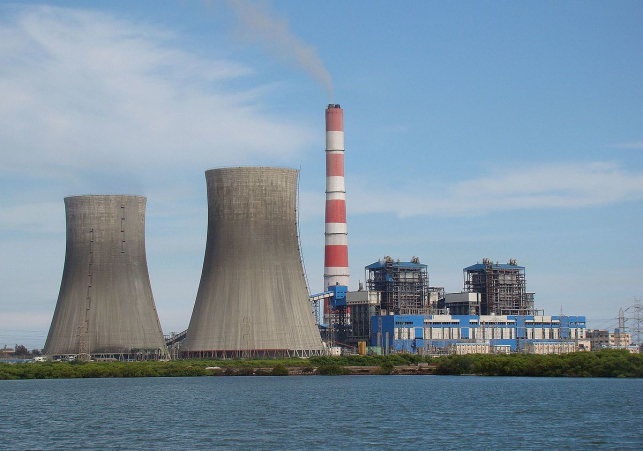
Coal needs to be consigned to history to limit global warming, says PM Boris Johnson, describing a UN report on climate change as "sobering".
Mr Johnson said there needed to be a shift towards clean energy sources, as well as providing "climate finance for countries on the frontline".
The landmark study found it was "unequivocal" that human activity was responsible for global warming.
Labour said the UK could not "afford the inaction of this government".
The report by the Intergovernmental Panel on Climate Change (IPCC) - the UN group on the science of climate change - said climate change was already here and causing chaos in some places.
Its authors said some of the changes, including rising sea levels, would not be reversed for hundreds or maybe thousands of years.
The publication comes less than three months before the UK hosts a key climate summit, known as COP26, in Glasgow.
- Follow live reaction to climate report
- Climate report is 'code red for humanity'
- Time nearly up to stop climate catastrophe - Sharma
- How serious is the government about COP26?
Mr Johnson said: "Today's report makes for sobering reading, and it is clear that the next decade is going to be pivotal to securing the future of our planet.
"We know what must be done to limit global warming - consign coal to history and shift to clean energy sources, protect nature and provide climate finance for countries on the frontline."
The UK government, which has adopted a 2035 deadline for a 78% emissions cut, is due to publish its strategy on cutting UK emissions to zero overall by 2050 this autumn.
Net zero means cutting carbon emissions as far as possible then balancing out any remaining releases, for example by tree planting.
"The UK is leading the way, decarbonising our economy faster than any country in the G20 over the last two decades," the prime minister said.
"I hope today's IPCC report will be a wake-up call for the world to take action now, before we meet in Glasgow in November for the critical COP26 summit."
The report said the world would reach or exceed temperature rises of 1.5C - seen as a threshold beyond which the worst impacts of global warming will be felt - over the next two decades.
Almost every nation on Earth signed up to the goals of the Paris climate agreement in 2015, which aims to keep the rise in global temperatures well below 2C this century and to pursue efforts to keep it under 1.5C.
Alok Sharma, COP26 president, said the next decade would be "decisive" and called on every government to "follow the science and embrace your responsibility to keep the goal of 1.5C alive".
media captionBBC Reality Check explains how to cut your carbon footprint
Labour leader Sir Keir Starmer said the report confirmed that the extreme weather events in recent months were "only going to become more frequent" and urgent action was needed.
"The biggest threat we now face is not climate denial but climate delay," he said. "Those who, like our prime minister, acknowledge there is a problem, but simply don't have the scale of ambition required to match the moment.
"Our communities and planet can no longer afford the inaction of this government, who are failing to treat the crisis with the seriousness it deserves."
Scotland's First Minister Nicola Sturgeon told ITV's Good Morning Britain she would be writing to the prime minister to encourage more co-operation between the devolved UK governments in light of the IPCC report, which she described as "a grim wake-up call".
Green Party MP Caroline Lucas called on governments thinking of delaying action any longer to study the "terrifying" report.
She tweeted: "We're seeing repercussions of decades of complacency and disregard for climate. Alarm bells are deafening - there can be no further excuse for inaction."
Climate scientist Dr Michael Byrne, a contributing author to the report, said the study was "particularly significant" as it was the first to link extreme weather events to human activities.
"That evidence was inconclusive back in 2013, at the time of the previous IPCC report; now it's irrefutable."
He said to slow and stop global warming, emissions of greenhouse gases needed to be "rapidly reduced" to net zero, but he added: "The UK and Scottish targets of net zero by 2050 and 2045 are not fast enough, we have to be more ambitious.
"Let's hope our political leaders, as they gear up to COP26 in Glasgow this November, take heed."
Related News